
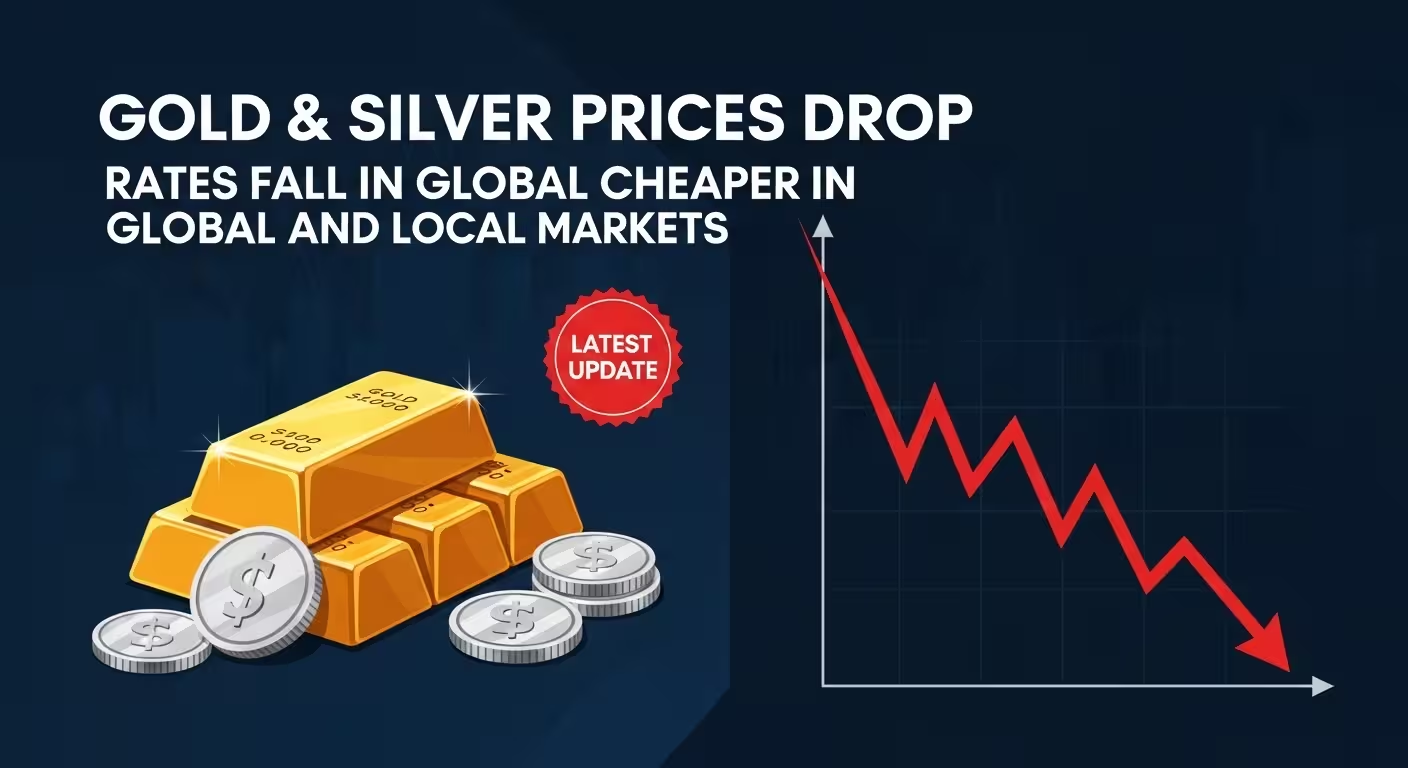
Huge Drop In Prices Gold And Silver: Complete Market Analysis & Latest Rates
The precious metals market just experienced something most Pakistanis haven’t seen in months—a dramatic price crash that’s got everyone talking. Gold and silver rates tumbled so sharply that jewelers’ phones won’t stop ringing, and wedding planners are suddenly feeling optimistic. For families who’ve been postponing jewelry purchases because of sky-high prices, this feels like the break they’ve been praying for. Visit eBiz Punjab for more updates on market trends and government initiatives.
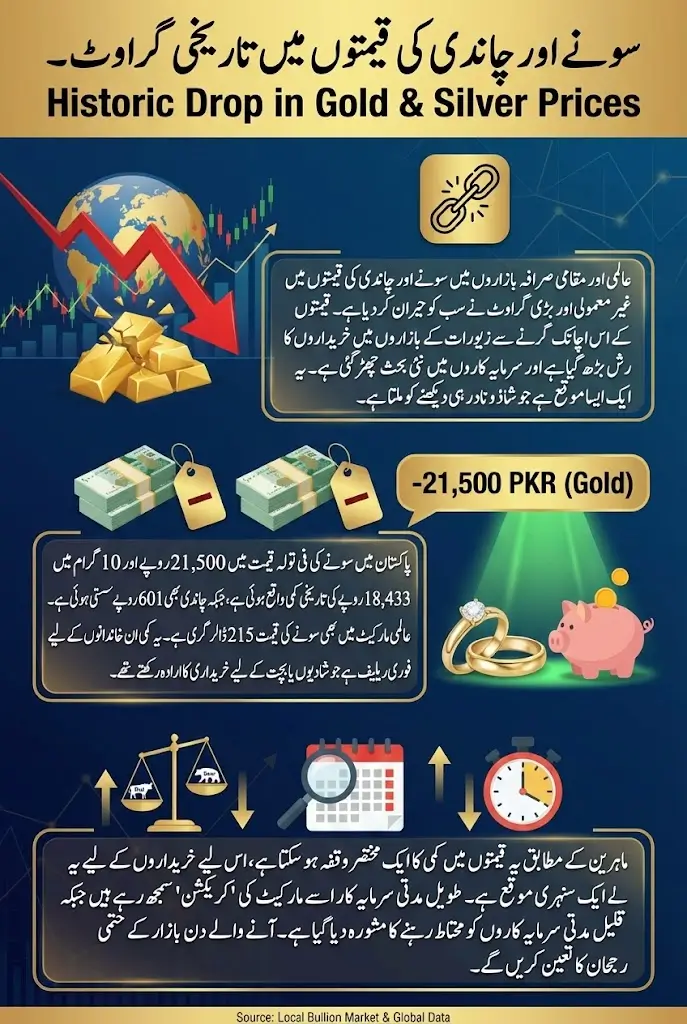
The bullion market doesn’t usually move this fast. When gold drops over Rs 21,500 in a single swing, and silver follows suit with a Rs 601 decline, people notice. From the bustling markets of Karachi to Lahore’s jewelry districts, there’s a palpable shift in mood. Buyers who felt priced out are now reconsidering their options, while investors are debating whether this dip signals opportunity or caution.
Understanding the Sudden Market Shake-Up
Precious metals rarely experience such violent swings without reason. The past few days have been particularly turbulent for both global and local bullion markets. International gold prices plummeted by $215, settling at $4,676 per ounce—a move that immediately rippled through Pakistan’s market structure.
This volatility stems from complex global economic dynamics. When international investment patterns shift, currency valuations fluctuate, or major economies adjust their monetary policies, precious metals respond immediately. Pakistan’s bullion rates track global benchmarks closely, meaning any international tremor gets felt locally within hours.
Market analysts point to several contributing factors:
- Strengthening of the US dollar affecting commodity prices
- Profit-taking by international investors after prolonged price rallies
- Shifting risk appetite among global financial institutions
- Technical corrections following extended price increases
Understanding these mechanisms helps explain why your local jeweler’s prices changed overnight despite no visible local economic event.
Latest Gold Rates Across Pakistan
According to the All Pakistan Bullion Gems and Jewelers Association, current gold pricing has reached levels not seen in recent months. The drop of Rs 21,500 per tola brought 24-carat gold to Rs 490,362—still expensive by historical standards, but significantly more accessible than last week.
For practical buyers, the 10-gram gold rate matters most. Now priced at Rs 420,406 after an Rs 18,433 reduction, this metric better reflects what most people actually purchase for jewelry or investment purposes.
Current Gold Pricing Structure
| Gold Type | New Price | Recent Change |
|---|---|---|
| 24 Carat (Per Tola) | Rs 490,362 | -Rs 21,500 |
| 24 Carat (10 Grams) | Rs 420,406 | -Rs 18,433 |
| 22 Carat (Per Tola) | Rs 449,165 | Proportional decrease |
| 21 Carat (Per Tola) | Rs 429,067 | Market adjusted |
| 18 Carat (Per Tola) | Rs 367,772 | Lower purity rate |
These rates represent wholesale benchmarks. Individual jewelers add making charges, shop margins, and design fees, so actual purchase prices vary between establishments.
Silver Market Shows Similar Trends
Silver, often called the accessible alternative to gold, experienced its own significant correction. The Rs 601 drop brought prices to Rs 8,405 per tola—making it considerably more attractive for budget-conscious buyers and small-scale investors.
Silver markets typically respond faster to global changes than gold. This metal serves dual purposes: industrial applications and investment hedging. When economic uncertainties rise, silver demand fluctuates more dramatically than its prestigious counterpart.
Internationally, silver fell $6.01 to reach $79.30 per ounce. This global movement directly influenced Pakistan’s local rates, demonstrating how interconnected modern bullion markets have become.
What Different Gold Purities Actually Cost
Most Pakistani jewelry isn’t pure 24-carat gold. Understanding purity levels helps buyers make informed decisions and avoid overpaying for lower-quality pieces.
Gold Purity Pricing Guide
| Gold Purity | Estimated Price Per Tola | Common Uses |
|---|---|---|
| 24 Carat | Rs 490,362 | Investment bars, coins |
| 22 Carat | Rs 449,165 | High-end jewelry |
| 21 Carat | Rs 429,067 | Standard jewelry |
| 18 Carat | Rs 367,772 | Fashion jewelry, daily wear |
Remember, making charges range from 8% to 25% depending on design complexity. Always request itemized bills showing gold weight, purity, and separate making charges.
Who Benefits Most From This Price Drop?
Different market segments view this decline through different lenses. For wedding planners and families with upcoming ceremonies, this represents genuine financial relief. Gold jewelry remains central to Pakistani wedding traditions, and even modest sets require substantial investment.
Small investors who practice systematic gold accumulation—buying small amounts monthly—suddenly find their purchasing power increased. What could only buy 8 grams last week might now stretch to 9 grams.
Jewelers themselves face mixed feelings. Lower prices stimulate demand, but existing inventory purchased at higher rates now represents unrealized losses. Smart dealers are offering special promotions to move older stock while prices remain depressed.
Investment Perspective: Opportunity or Warning Sign?
Experienced precious metals investors know that sharp corrections don’t necessarily indicate long-term weakness. Gold’s fundamental role as an inflation hedge and crisis asset remains unchanged despite short-term volatility.
Historical patterns suggest gold rebounds after significant drops, often reaching new highs within 6-12 months. However, timing markets perfectly proves difficult even for professionals.
Short-term investors should exercise caution. Further declines remain possible if global factors intensify. Stop-loss strategies and careful position sizing become crucial.
Long-term holders might view this as a strategic buying opportunity. Accumulating during dips has historically rewarded patient investors who maintain 3-5 year horizons.
Global Factors Driving Local Prices
Pakistan’s bullion market doesn’t operate in isolation. International developments ripple through local pricing structures within hours. Current global dynamics include:
- Federal Reserve policy signals affecting dollar strength
- Geopolitical tensions influencing safe-haven demand
- Indian wedding season impacting regional demand patterns
- Chinese economic indicators affecting Asian markets
These factors create complex interactions that even seasoned traders struggle to predict accurately. What seems like random volatility often reflects sophisticated global capital flows adjusting to new information.
Practical Buying Strategies for Current Market
If you’re considering purchases, strategic timing and careful research matter tremendously. Don’t rush into decisions based solely on price drops—verify purity, compare making charges across shops, and understand total ownership costs.
Smart buying practices include:
- Request hallmark certification for purity verification
- Compare prices across multiple reputable dealers
- Negotiate making charges—they’re often flexible
- Consider buying certified investment bars for pure investment purposes
- Document all purchases with detailed receipts
For those purchasing jewelry, focus on classic designs with lower making charges. Trendy, intricate pieces carry premium costs that don’t translate into resale value.
Market Outlook and Price Predictions
Predicting exact price movements remains impossible, but analyzing trends helps set realistic expectations. If international prices stabilize around current levels, Pakistan’s local market should find equilibrium quickly.
However, several scenarios could alter this trajectory:
- Further global declines would pressure local rates downward
- Rupee depreciation could offset international price drops
- Seasonal demand increases might support price recovery
- Import duty changes could restructure local pricing
Most analysts expect consolidation around current levels for the next 2-4 weeks, followed by gradual upward movement as bargain hunters enter the market.
Frequently Asked Questions
Is now the best time to buy gold in Pakistan?
Current prices offer better value than recent months, but “best time” depends on individual circumstances. If you need jewelry soon, current rates provide good opportunities. Long-term investors might consider dollar-cost averaging—buying fixed amounts regularly regardless of price fluctuations.
Will gold prices drop further this month?
Market predictions remain uncertain. Global factors could push prices either direction. Setting price alerts and monitoring international gold rates helps track potential movements. Avoid trying to catch absolute bottom prices—focus instead on reasonable value ranges.
How does international gold pricing affect Pakistan’s market?
Pakistan imports most gold, so international prices directly impact local rates. Currency exchange rates, import duties, and local demand add layers to final retail pricing. Typically, significant international movements reflect in Pakistani markets within 24-48 hours.
Should I sell my existing gold jewelry now?
Selling during price drops rarely benefits owners unless urgent cash needs exist. Jewelry resale typically yields 60-75% of current market rates due to making charge losses. Unless financial necessity demands it, holding during corrections usually proves wiser than panic selling.
What’s the difference between 22 and 24 carat gold for investment?
24-carat gold offers maximum purity (99.9%) and easier resale liquidity, making it ideal for pure investment. 22-carat gold (91.6% purity) provides durability for jewelry but carries making charges that don’t recover during resale. Investment-focused buyers should prefer 24-carat bars or coins.
Final Market Thoughts
This significant price correction has created a brief window of opportunity that won’t last indefinitely. Whether you’re planning purchases or reconsidering investments, informed decisions beat impulsive reactions every time.
The precious metals market operates in cycles. Today’s decline might feel dramatic, but gold and silver have weathered countless corrections throughout history, consistently maintaining long-term value. Smart buyers focus on fundamentals rather than chasing perfect timing.
For those monitoring developments, staying connected with government initiatives and market analysis through platforms like eBiz Punjab provides valuable context for financial decisions. Understanding broader economic patterns helps navigate volatile markets with confidence rather than confusion.
Remember, the best purchase timing aligns with your actual needs and financial capacity—not just market movements. Whether prices rise or fall next week matters less than making decisions that fit your personal circumstances and long-term objectives.