
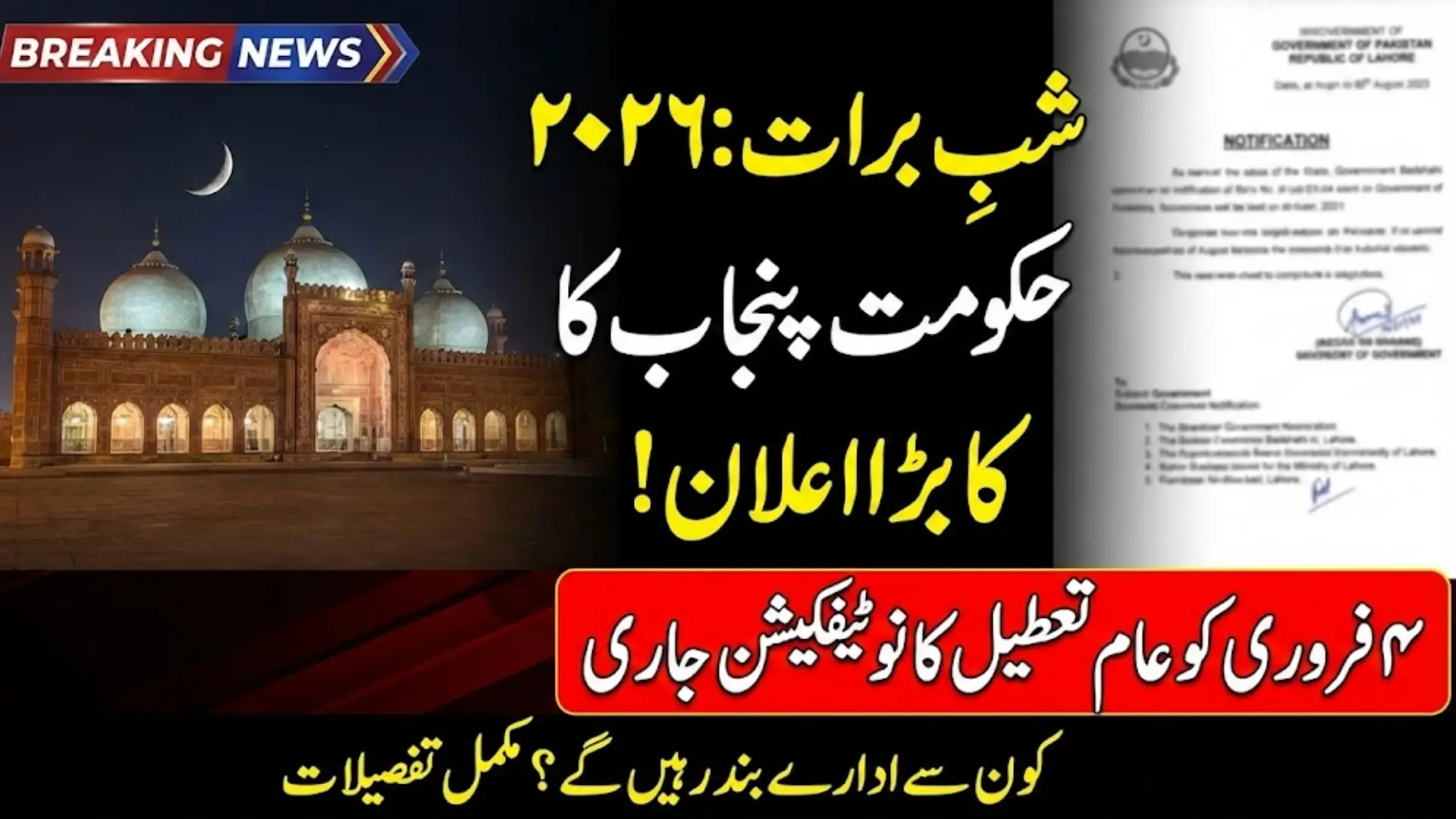
Shab E Barat 2026 Holiday In Pakistan Official Feb 4 Announcement Confirmed
Finding time for proper worship feels nearly impossible when you’re juggling work deadlines, school schedules, and family responsibilities. Shab-e-Barat arrives every year on the 15th of Shaban, but for working families and students, participating fully in this blessed night means either staying awake all night and dragging through the next day exhausted, or skipping important worship entirely.
This year is different. The Punjab government officially announced Wednesday, February 4, 2026, as a public holiday for Shab-e-Barat. This means millions of Muslims across Punjab can observe this sacred night without worrying about office hours, class attendance, or work pressure the following day. The announcement came through formal notification from the Services and General Administration Department, bringing welcome relief to families who previously struggled to balance religious duties with daily obligations. This decision aligns with government efforts to support citizens through various welfare initiatives managed via the Ebiz Punjab Portal.
Understanding Shab-e-Barat’s Religious Significance
Shab-e-Barat, known as the Night of Forgiveness or Laylat al-Bara’ah in Arabic, falls on the 14th and 15th night of Shaban, the eighth month of the Islamic calendar. Muslims believe this night carries immense spiritual importance as a time when Allah descends to the lowest heaven to grant forgiveness to those who sincerely repent.
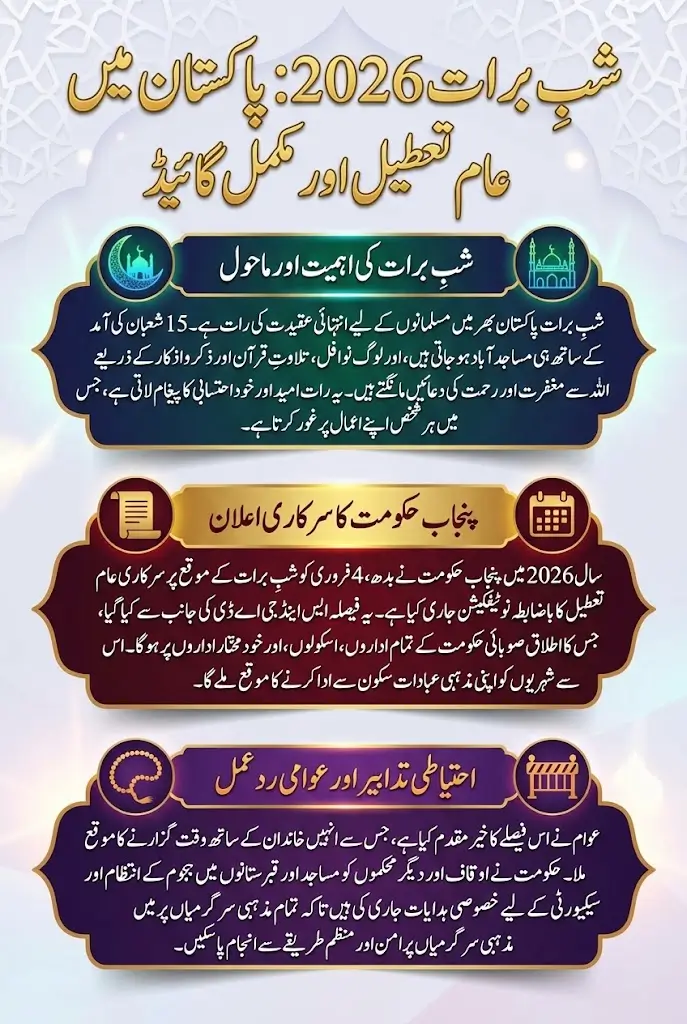
What Makes This Night Special
Divine forgiveness and mercy
Islamic tradition holds that on this night, Allah reviews the deeds of humanity and determines destinies for the coming year. Those who spend the night in worship, seeking forgiveness with pure hearts, receive divine mercy.
Preparation for Ramadan
Shab-e-Barat arrives roughly two weeks before Ramadan begins. Many Muslims use this night as spiritual preparation, cleansing their hearts through repentance before entering the blessed month of fasting.
Connection with departed souls
Visiting graveyards to pray for deceased relatives is a widespread practice. Families gather at burial sites, reciting Quran and making supplications for forgiveness of those who passed away.
Opportunity for life-changing repentance
Muslims believe genuine repentance on this night can transform lives. People who committed mistakes throughout the year seek Allah’s forgiveness and make serious commitments to improve their conduct.
Official Punjab Government Holiday Notification Details
The Punjab government’s decision covers comprehensive ground, ensuring maximum accessibility for citizens across the province.
Complete Coverage Scope
The holiday applies uniformly across these institutions:
All provincial government offices
Every department under Punjab government administrative control closes for the day. This includes secretariat departments, attached departments, and field offices across all districts.
Autonomous and semi-autonomous bodies
Organizations like WAPDA divisions, development authorities, and similar entities fall under this notification.
Government corporations and authorities
Public sector corporations, local councils, and municipal authorities observe the holiday province-wide.
Educational institutions (government and semi-government)
Schools, colleges, and universities operating under government control remain closed, giving students and teachers full freedom to participate in religious activities.
This broad implementation ensures families don’t face situations where some members have holidays while others must work or attend school.
How Different Communities Observe Shab-e-Barat
Religious practices vary by region but share common elements.
Night-long prayers (Nawafil) – Voluntary prayers including Salat-ul-Tasbih
Quran recitation – Especially Surah Yasin
Extended supplications – Asking Allah for forgiveness and guidance
Graveyard visits – Praying for deceased relatives
Community mosque programs – Lectures and group worship
Charitable activities – Distributing food and giving sadaqah
Provincial Implementation Ensures Equal Access
One crucial aspect of this announcement is its equal application throughout Punjab, from major cities to remote rural areas.
| Region Type | Implementation | Benefit |
|---|---|---|
| Major Cities | Full holiday for all covered institutions | Large crowds can worship peacefully |
| Small Cities | Same uniform application | Equal treatment regardless of location |
| Rural Areas | Complete district-wide coverage | Villages get same rights as urban centers |
| Remote Districts | No exceptions or variations | Prevents discrimination and confusion |
This province-wide uniformity prevents the confusion and complaints that often arise when holidays apply differently in various regions. Everyone knows February 4, 2026, is a confirmed off day across Punjab.
Special Arrangements for Public Safety
The government directed relevant departments to ensure smooth worship experiences.
Auqaf Department coordinates mosque arrangements and crowd flow
Traffic police deployed at major mosques and graveyards
Security forces ensure peaceful worship without disturbances
Emergency services remain on standby for medical needs
Municipal authorities maintain cleanliness at public sites
Connection with Government Welfare Programs
The government’s recognition of religious observances like Shab-e-Barat connects with broader welfare initiatives supporting citizens’ needs. Just as the holiday allows spiritual fulfillment, programs like PSER Online Registration help families access welfare benefits, while the 9999 Ramzan Relief Scheme provides crucial support during the upcoming holy month of Ramadan.
Similarly, the 8070 Registration Online system connects deserving families with government assistance programs. These digital platforms, accessible through the eBiz Portal Login, demonstrate how technology helps government services reach citizens more effectively.
Media Publicity and Public Awareness Campaign
The Director General (Public Relations) Lahore ensures widespread notification through print media (major newspapers), electronic media (TV and radio), digital platforms (government social media and websites), and community announcements at mosques.
What Citizens Should Know Before February 4
Prepare spiritually by starting repentance early, learning proper prayer methods, preparing dua lists, and organizing family participation.
Practically, avoid unnecessary travel, respect public spaces at mosques and graveyards, follow safety guidelines with candles and children, and cooperate with authorities’ traffic and security directions.
Frequently Asked Questions
Is Shab-e-Barat 2026 a public holiday across all of Pakistan?
Punjab and Sindh have officially announced February 4, 2026, as a public holiday. Other provinces typically follow similar patterns but make independent decisions. Check your provincial government announcements for confirmation.
Do private companies have to observe the Shab-e-Barat holiday?
Government notification covers only public sector institutions. Private companies decide independently whether to give employees the day off, though many do for religious observance.
What is the exact date for Shab-e-Barat in 2026?
Shab-e-Barat night falls on Tuesday evening, February 3, 2026 (14th Shaban), continuing into Wednesday, February 4, 2026 (15th Shaban). The public holiday is Wednesday.
Are banks and post offices closed on Shab-e-Barat 2026?
Government banks under provincial control close. Federal banks follow State Bank of Pakistan holiday calendars. Confirm with your specific bank branch.
Can I visit graveyards during daytime on February 4?
Yes, though traditional practice involves nighttime visits. Many people visit during daytime hours on the 15th of Shaban for convenience and safety.
Final Thoughts for Peaceful Observance
The Shab-e-Barat public holiday on February 4, 2026, provides a meaningful opportunity for spiritual renewal and family connection. This government recognition respects religious sentiments while ensuring citizens can participate without professional or educational penalties.
Use this time wisely. Plan your worship, involve your family, and approach the night with sincere repentance and hope. The true benefit comes not from having the day off but from genuinely seeking Allah’s forgiveness and committing to positive change.
May this blessed night bring peace, forgiveness, and spiritual growth to all who observe it with pure intentions across Pakistan.